
Most documents arrive as PDFs. Most business software expects data. Between the two sits document processing, and the question of which format the result should take.
The short answer: both, because people and systems need different things.
PDF: made for people
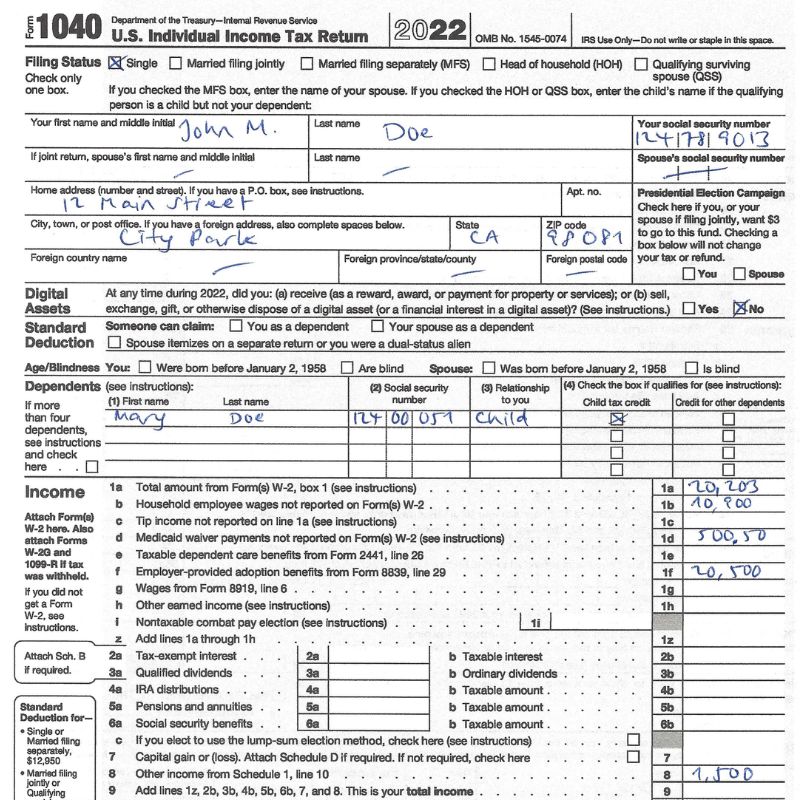
A PDF looks the same on every screen and every printer. That makes it the standard for contracts, invoices, reports and forms.
What a PDF does not do is tell software what it contains. In a scanned PDF the text is only an image. Even in a digital PDF, a program does not know which number is the amount and which is the customer number.
JSON: made for systems
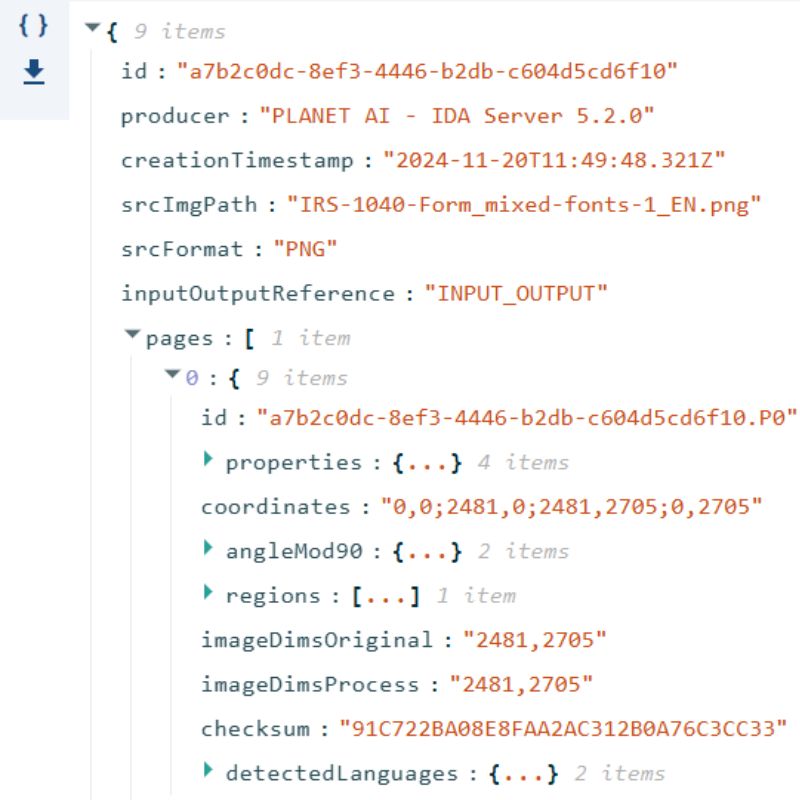
JSON (JavaScript Object Notation) is a text format for structured data. Every value has a name: “invoice_number”: “2024-0815”. Almost every system and every interface (API) can read JSON directly.
What JSON does not do is look like the original document. For people, it is hard to read.
PDF and JSON compared
| JSON | ||
|---|---|---|
| Made for | People | Systems |
| Shows | The document as it looks | The data it contains |
| Typical use | Reading, archiving, sending | Interfaces, automation, analysis |
| Readable by software | Only after text recognition | Directly |
Why document processing delivers both
In document processing, PDF plays two roles. It is the most common input, and a useful output.
IDA reads an incoming PDF, classifies it and extracts the data as JSON. That JSON goes to the specialist application, the ERP or the DMS. At the same time, IDA can produce a searchable PDF with a text layer and the extracted data as metadata. That PDF lands in the archive, searchable and correctly filed.
Existing systems stay in place. Document processing feeds them what they need. More on the difference between structured and unstructured data in our blog post on structured data.
Frequently asked questions
What is JSON?
A text format for structured data. Every value is stored with a name, which makes JSON the usual way to exchange data between systems.
What is a searchable PDF?
A PDF with an invisible text layer on top of the image. The page looks unchanged, but you can search and copy the text.
When do I need PDF, and when JSON?
PDF when people read, archive or send the document. JSON when a system processes the data further.
Can I get both?
Yes. IDA delivers the extracted data as JSON and, if needed, a searchable PDF for the archive.
See it with your documents
In a demo, we show you how IDA turns your PDFs into data, and back into searchable PDFs.